- For Ex Zones 2 and 22
Designed to meet ATEX requirements - Customisable
Dimensions and equipment as required - Everything from a single source
From planning to installation
Personal project consultation:
+49 5939 96796-90
Or request a quote directly:
Which Configuration Is Right for Your Project?
We offer our ATEX scissor lift tables for Zone 2 and Zone 22. The configuration is tailored to the intended area of use and project-specific requirements.
Choose a preconfigured option as a starting point or request a custom solution. For options 1–3, you can specify different load capacities, dimensions and equipment directly in the “Change requests” field.
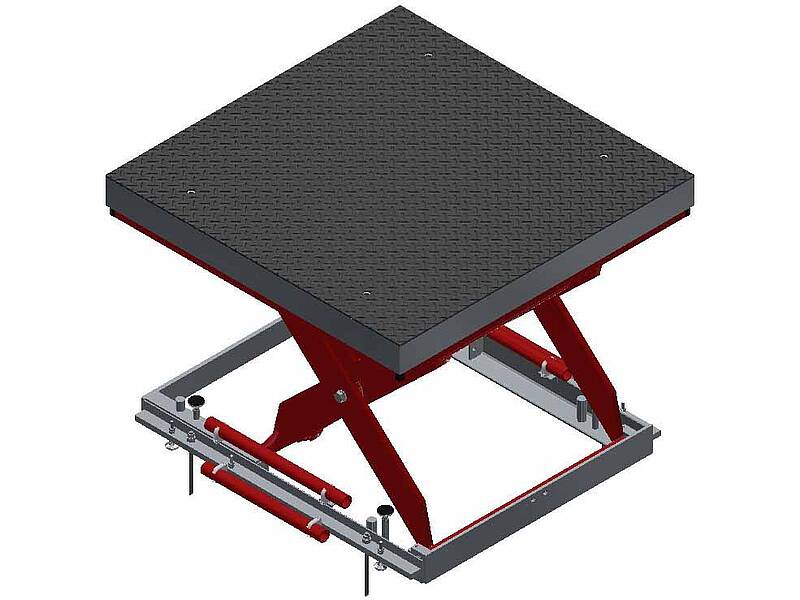
| Payload: | 1,500 | kg |
| Platform length: | 1,250 | mm |
| Platform width: | 1,250 | mm |
| Effective stroke: | 800 | mm |
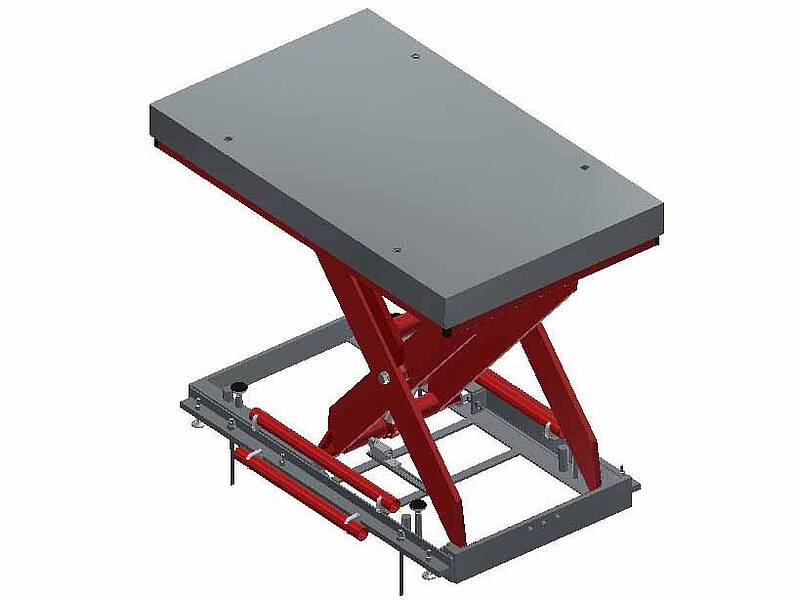
| Payload: | 500 | kg |
| Platform length: | 1,250 | mm |
| Platform width: | 830 | mm |
| Effective stroke: | 800 | mm |
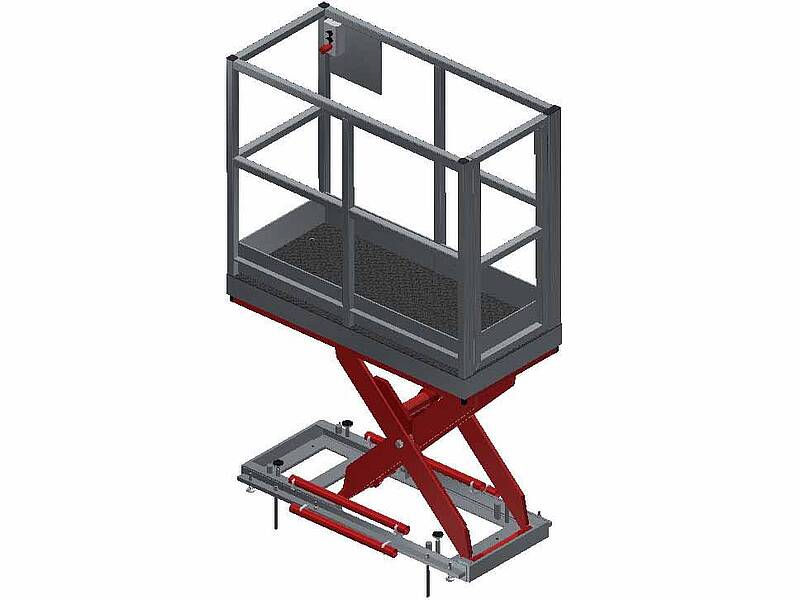
| Payload: | 500 | kg |
| Platform length: | 1,400 | mm |
| Platform width: | 1,000 | mm |
| Effective stroke: | 850 | mm |

| Payload: | by request |
| Platform length: | by request |
| Platform width: | by request |
| Effective stroke: | by request |

When Do I Need an Explosion-Protected Scissor Lift Table?
An ATEX scissor lift table is required when it is intended for use in an area classified as potentially explosive. An explosive atmosphere can arise, for example, during painting processes or when handling flammable substances.
Electrical and mechanical components can act as ignition sources in such areas. The components used and the technical design of the lift table must therefore be adapted to the respective Ex zone and its applicable requirements.
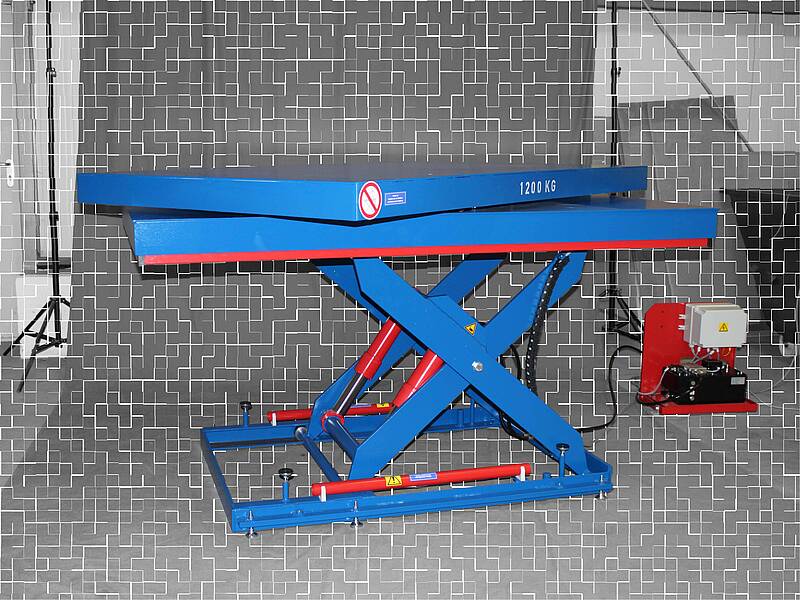
What Makes an ATEX Scissor Lift Table Different?
ATEX scissor lift tables are specifically designed for use in potentially explosive areas. Potential ignition sources are taken into account during the design process and component selection.
Depending on the intended application, this may affect electrical and mechanical components, sensors, switches and the control system. Measures to prevent electrostatic charge build-up may also be required.
The specific configuration depends on the respective Ex zone and the conditions at the place of use. Each ATEX scissor lift table is therefore tailored to the intended application on a project-specific basis.
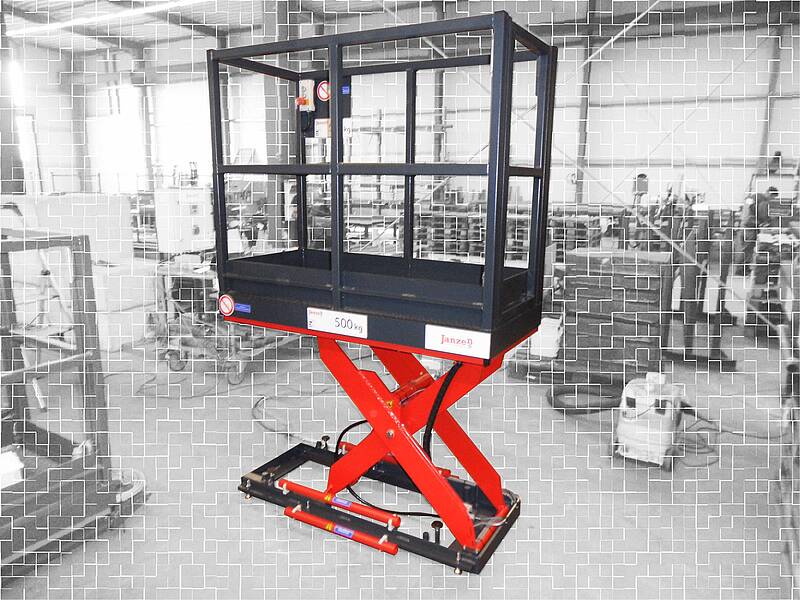
Why Can It Make Sense to Position the Hydraulic Power Unit Outside the Ex Zone?
Explosion-protected hydraulic power units generally involve higher purchase costs. It can therefore make sense to position the power unit outside the Ex zone.
To achieve this, the power unit is installed separately from the lift table and connected to it via hydraulic lines. If the power unit is located outside the potentially explosive area, a conventional hydraulic power unit can be used.

Which Ex Zones Do We Offer ATEX Scissor Lift Tables For?
Potentially explosive areas are classified according to how frequently and for how long an explosive atmosphere may occur. A distinction is made between areas with gases, vapours or mists and areas with combustible dusts.
| Occurrence of an explosive atmosphere | Dust | Gas/Vapour/Mist |
|---|---|---|
| An explosive atmosphere is present continuously, frequently or for long periods | Zone 20 | Zone 0 |
| An explosive atmosphere occurs occasionally during normal operation | Zone 21 | Zone 1 |
| An explosive atmosphere does not normally occur during normal operation or occurs only for short periods | Zone 22 | Zone 2 |
We offer ATEX scissor lift tables for Zone 2 and Zone 22. These zones cover areas where an explosive atmosphere does not normally occur during normal operation or occurs only for short periods. Zone 2 applies to explosive atmospheres consisting of gases, vapours or mists, while Zone 22 applies to explosive atmospheres in the form of combustible dust.
We currently do not offer suitable scissor lift tables for applications in other Ex zones.
Who Determines the Ex Zone?
In Germany, Ex zones are determined based on the risk assessment at the installation site. Responsibility lies with the employer or operator of the facility concerned.
To design an ATEX scissor lift table, we need to know the designated Ex zone at the enquiry stage. We do not determine the Ex zone ourselves; this information must be provided to us for the intended area of use.
Based on this information, we tailor the technical design and required components of the scissor lift table to the conditions at the installation site.